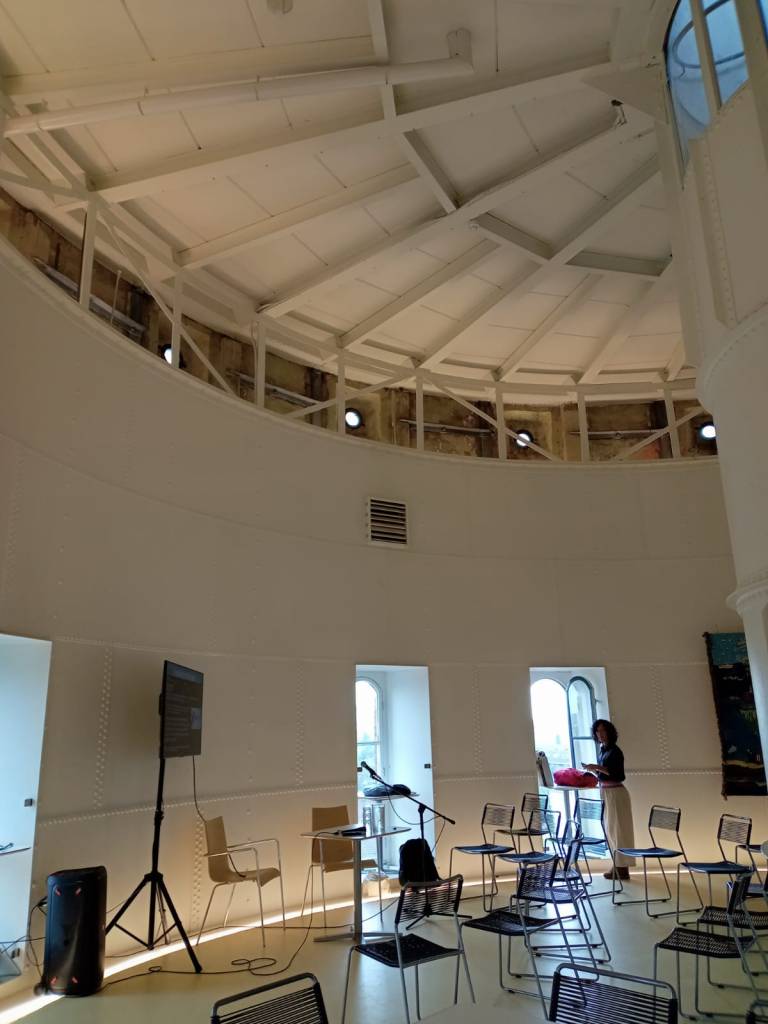
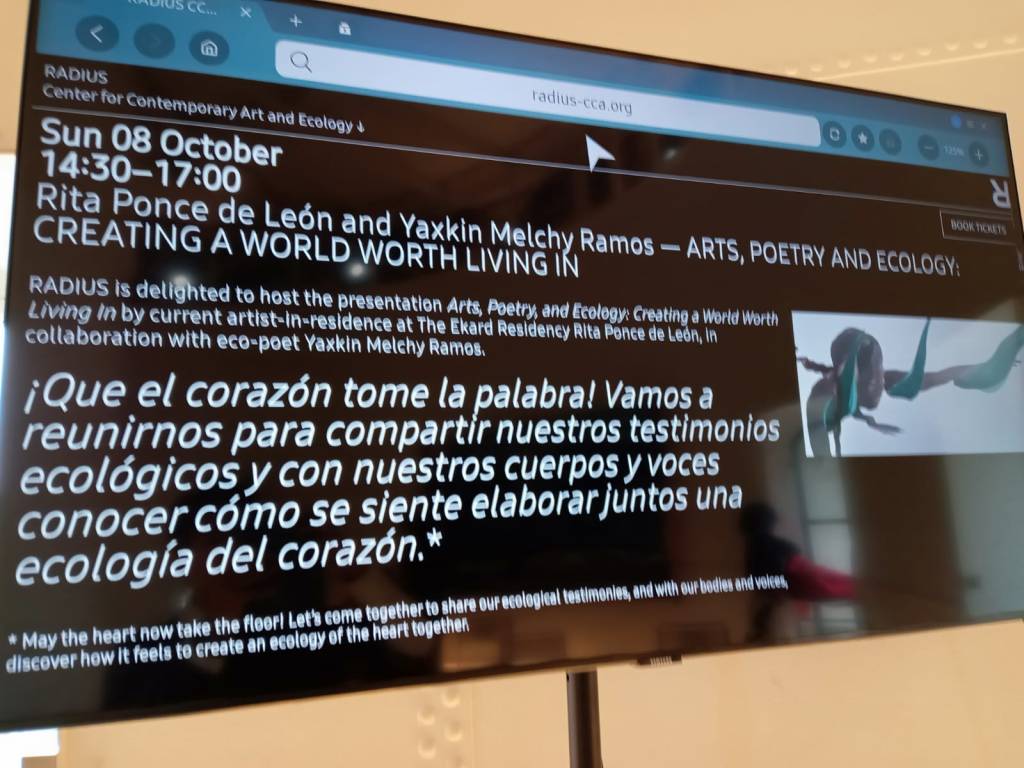
I was invited to Holland by my friend, the artist in residence Rita Ponce de León, and the Ekard artistic residence. We presented a talk with Rita at the RADIUS museum (in the city of Delft), a fascinating Museum of Art and Ecology built in what was once a water tower.
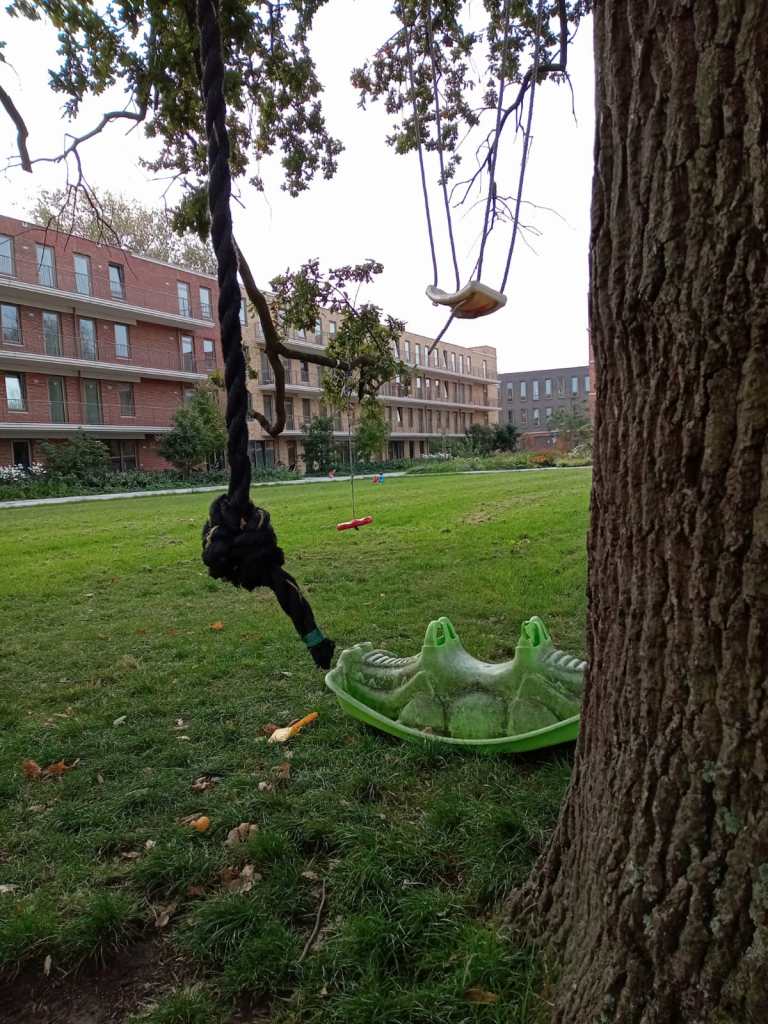
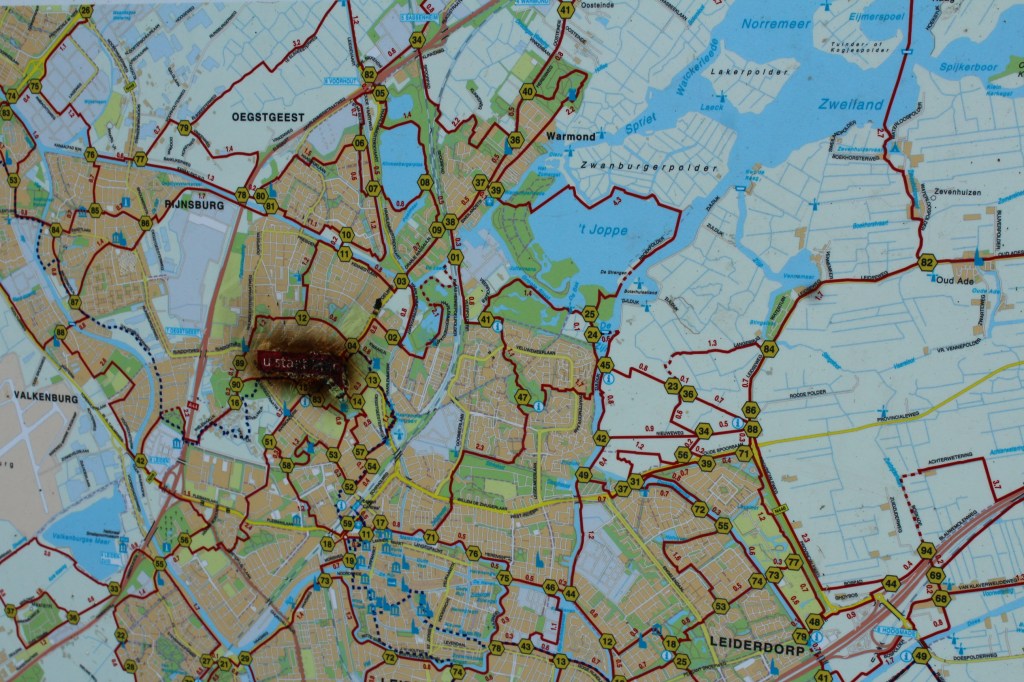
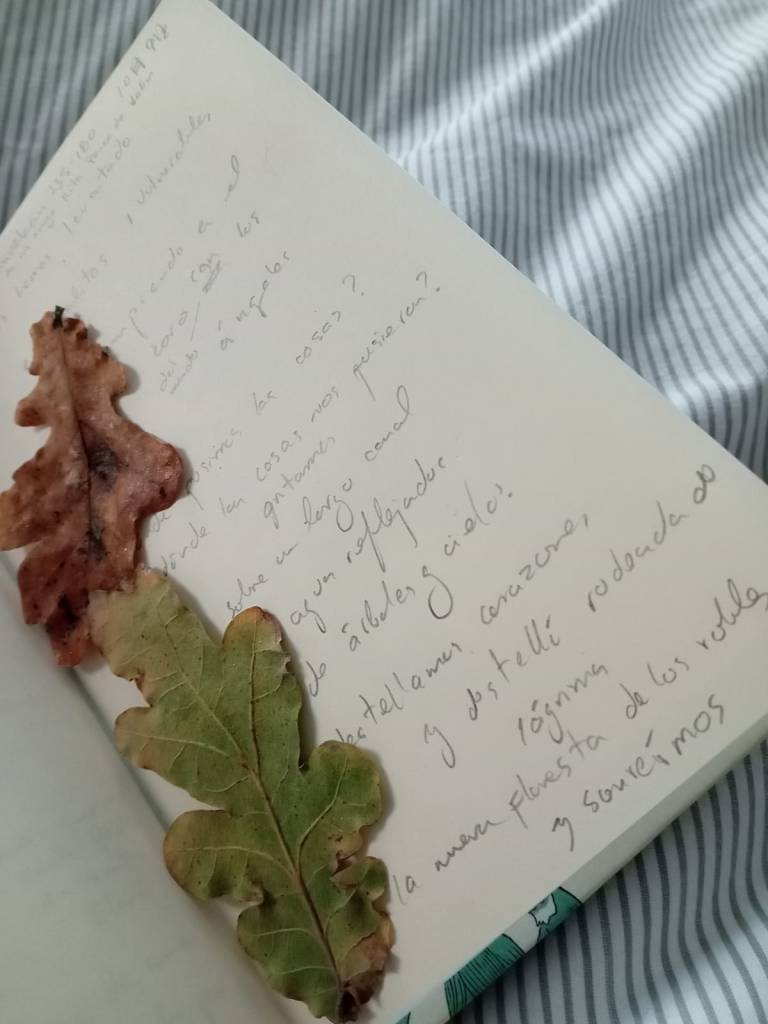
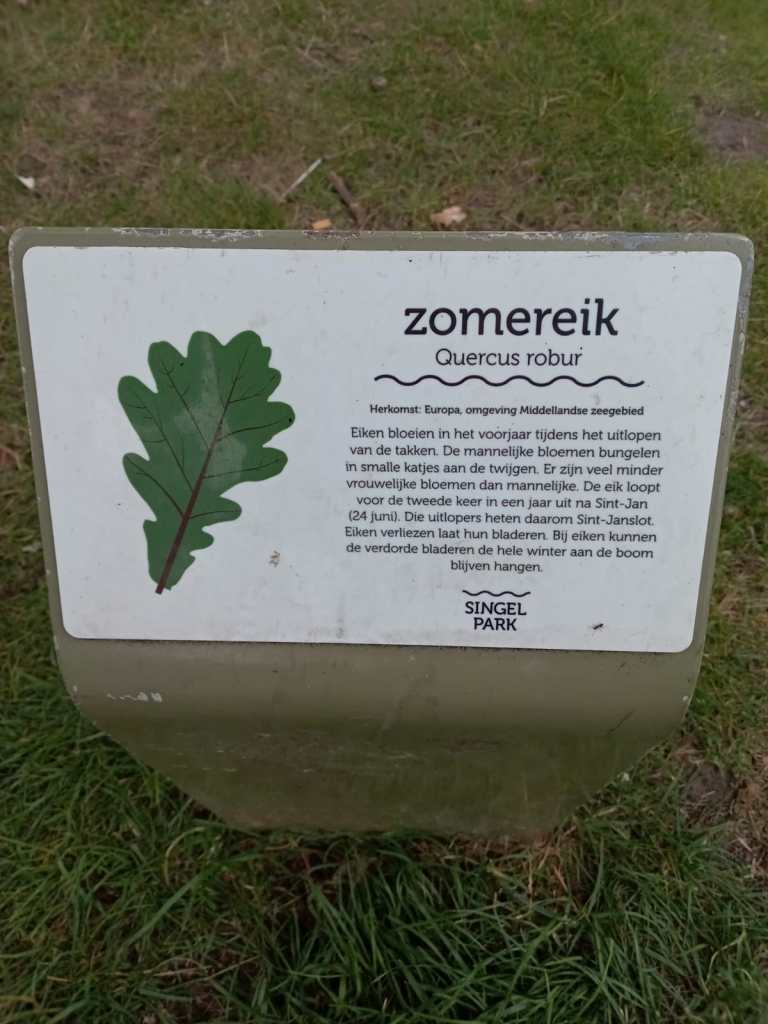
Although my trip to Holland was short, it was very significant since I lived in Leiden for three years as a primary school child. With Rita, we walked through the Meijendel dunes in Wassenaar and Leiden. When I arrived in Holland, I wondered what the ecopoetic meaning of this trip would be. In Meijendel, I realized something in my heart, so I took a fistful of sand and thanked the Dutch lands for the good memories from my childhood, memories of the countryside, the forest, the sea, the canals, and the flowers that made me happy and awakened in me a sense of nature’s beauty. With Rita, we went to my old condominium on Boerhavelaan Street, and we found the oak tree (zomereik) under which I used to play in the middle of the courtyard. Surprisingly, a swing is still under the leaves, meaning children are still visiting this tree. Under the zomereik, I said to Rita, isn’t our life short? With all its dramas, how is our life for a tree like this? For the oak, our life lasts a little longer than summer flies. And despite this, the tree offers itself generously and even feels admiration for our songs, just as we do for the song of the cicadas. Then I told the zomereik -dear oak, here I am back. I grew up and became a poet.
I remember Rita’s words during those days: “Recently, I have only seen comments from scientists who are very sad, angry, and worried about the climate crisis.” For some people, ecological concern makes them forget their love and gratitude for being part of the earth. With Rita, we discussed some ideas:
- Anger and worry are anti-ecological.
- There is nothing more ecological than gratitude and the feeling of fulfillment.
- Ecology is not only a program, an objective, a goal, or a horizon, but the consequence of a way of life. What would it be like to think ecologically from the patterns woven by experience?
- As my friend Pedro Favaron says, an indigenous ecopoetics is a way of life connected to the land and the sacred network of existence.
- Patterns woven by connected lives reveal the shapes of the heart’s learnings. Asian and Indigenous peoples’ thoughts and arts nourish our ecopoetics.
During the presentation at RADIUS, we made a small offering, discussed our work in synchrony (between the plastic arts and poetry), and led an «ecopoetic exercise» of memory and gratitude with the attendees.

Finally, I thank Renee and Bob, our hosts at the Ekard residence, Sanne Luteijn and Niekolaas Johannes Lekkerkerk, who managed the presentation at Radius, and photographers Newsha Tavakolian and Maarten Nauw for the photographs of this encounter with the lands of Holland. Also, thank you to Claire van den Donk for translating my poem into Dutch.
Wat doet een dichter?
(¿Qué hace un poeta?/What does a poet do?)
Hij verklaart de hemel met zijn zang
uit zijn bloed geboren
in eeuwige beweging
zijn bloed is het bloed van de rivieren
de ideeën in zijn geest
niet één valse schepping
want hij is zelf de schepping
het licht van de bladeren rakend
De sterren passen in de palm van zijn hand
zoals hij past in de handpalm van zijn broer
van zijn vriend, zijn metgezel,
van zijn geliefde
Zijn woord is er om
de moderne rook
die zich vastklampt en in onze harten nestelt
te verdrijven
Het lied van de dichter blaast
en waait het stof op,
troebleert de zeeën
met roerende rust
laat de keien lachen
de vogels verfijnen hun lied,
rivieren vloeien samen door hun zang
als kinderen die van dezelfde vruchten eten
Met zijn poëzie weeft hij
iets lumineus en schoons
dat in een oogwenk wordt verspreid
en de ochtenden van de wereld
bedekt met een zonnedauw
alle ochtenden van de nieuwe wereld
Hij deinst terug
voor de schitterende fascinatie
van zijn literaire vaders
hij laat de mantel van fascinatie achter
hangend aan een kapstok
en gaat naakt, ongekleed
met het lied van zijn haarstrengen
die onderweg vallen
op zijn kussen
op de badkamervloer
op de aarde van de buurt
op de bron waar hij zijn hoofd in onderdompelde
zoals de universiteit
waar hij zijn tijd bakkeleiend doorbracht
met onnozelen
dezelfde universiteit
waar hij ’s middags
de heldere spiegel van woorden bestudeerd
(een helderheid diepzinnig maar ook verontrustend)
Hij verliest strengen haar terwijl hij leest
wanneer hij zingt
als hij halthoudt om te luisteren
wanneer hij zijn broeders over het leven leert
terwijl hij deze zintuigen verliest
en zijn ogen en oren en zijn andere ogen
die nog steeds ruimte voor trots bewaren
en zijn nagels en zijn huid
en zijn botten
Hij heeft de hunkering naar het creëren achtergelaten
maar zijn ziel gaat voort, gezuiverd nu,
tot in de eeuwigheid.
Dan wordt er nog een dichter geboren:
— … Waar de oude meester ooit woonde
staat nu een boom.
San José, Pucallpa, 2016.
Ciudad de México, 2018.
Tsukuba, 2020.
Vertaald door Claire van den Donk, ARTDOK Research & Translations

Fui invitado a Holanda, por mi amiga la artista en residencia Rita Ponce de León y la residencia artística Ekard. Con Rita presentamos una plática en el museo RADIUS (en la ciudad de Delft), un fascinante museo de arte y ecología construido en lo que fue una torre de agua.
Aunque mi viaje a Holanda fue corto, fue muy significativo, pues yo viví tres años en Leiden cuando era un niño de primaria. Con Rita paseamos por las dunas de Meijendel, en Wassenar, y por Leiden. Cuando llegué a Holanda, me preguntaba cuál sería el sentido ecopoético de este viaje. En Meijendel me di cuenta de algo en mi corazón, tomé un puño de arena y le agradecí a las tierras holandesas por los buenos recuerdos de mi niñez, el campo, el bosque, el mar, los canales y las flores que hicieron felices mis días y despertaron en mí un sentido de la belleza de la naturaleza. Junto con Rita fuimos al antiguo condominio de la calle Boerhavelaan y encontramos, en medio del patio, el roble (zomereik) bajo el que solía jugar. Sorprendentemente todavía se encuentra un columpio debajo de su fronda, lo que significa que hay niños que visitan a este árbol. Bajo el zomereik le dije a Rita: ¿no es corta nuestra vida? Con todos sus dramas, ¿cómo es nuestra vida para un árbol como éste? Para el roble, nuestra vida dura un poco más que las mosquitas del verano. Y a pesar de ello, el árbol se ofrece generosamente y hasta siente admiración por nuestros cantos, tal como nosotros sentimos admiración por el canto de las cigarras. Luego le dije al zomereik — querido roble, aquí estoy de regreso, crecí y me volví poeta.
Recuerdo unas palabras que me compartió Rita hace unos días: “Recientemente sólo he visto comentarios de científicos muy tristes, enojados y preocupados por la crisis climática.” Para algunas personas, la preocupación ecológica les hace olvidar el amor y la gratitud por formar parte de la tierra. Con Rita conversamos algunas ideas:
- El enojo y la preocupación son antiecológicos.
- No hay nada más ecológico que el agradecimiento y el sentimiento de plenitud.
- Lo ecológico no es un programa, un objetivo, una meta ni un horizonte, sino la consecuencia de una forma de vida.
- ¿Cómo sería pensar lo ecológico desde los patrones entretejidos por la experiencia?
- Una forma de vida en relación con la tierra y la red sagrada de la existencia es, como dice mi amigo Pedro Favaron, una ecopoética indígena.
- Los diseños entretejidos por las vidas que se conectan nos muestran las formas del aprendizaje con el corazón. Del pensamiento y las artes de Asia, y de los pueblos indígenas, se nutre nuestra ecopoética.
Durante la presentación en RADIUS hicimos una pequeña ofrenda, hablamos de nuestros trabajos en sincronía (entre las artes plásticas y la poesía) e hicimos un ejercicio ecopoético de memoria y agradecimiento con los asistentes.
Por último, agradezco a Renee y Bob, nuestros anfitriones de la residencia Ekard, a Sanne Luteijn y Niekolaas Johannes Lekkerkerk, que gestionaron la presentación en Radius, y a los fotógrafos Newsha Tavakolian y Maarten Nauw por crear un registro fotográfico de este encuentro con las tierras de Holanda. También a Claire van den Donk por la traducción de mi poema al holandés.


 Flor de Amaneceres