Publicaciones y reseñas de 2023 / 2023 Publications and Reviews

Comparto publicaciones y reseñas del año que acaba de pasar, siempre agradezco las miradas que se comparten.
Este mes, enero de 2024, comienza un nuevo año en Japón, con terremotos y con esperanza.
También la tierra que ha fructificado en otoño se recupera para volver a nacer en la primavera.
Gracias, a Kathy Wu y la Rain Taxi Magazine, Ryan Greene (traductor de muchos poemas míos al inglés), Giancarlo Huapaya y Cardboard House Press;
Gracias a Rob McLennan, Genevieve Kaplan y Veliz Books;
Gracias a Adrián Ibarra , Luz bajita y También el caracol.
Gracias a The Offing Magazine.
Finalmente a Nicholas Grosso, Sabrina Morreales y Lorenzo Perri, curadores de la Architecture Book Fair por seleccionar el libro dentro de la curaduría de obras.

I want to share some reviews from the year that has just passed; I always appreciate new readings of poems and people who share their views.
This month, January 2024, a new year begins in Japan, with earthquakes and with hope.
Also, the land that has fructified in autumn is recovered to be born again in the spring.
Thanks to Kathy Wu and Rain Taxi Magazine, Ryan Greene (translator of many of my poems in English), Giancarlo Huapaya, and Cardboard House Press;
Thanks to Rob McLennan, Genevieve Kaplan, and Veliz Books;
Thanks to Adrián Ibarra, Luz bajita, and Tambien el caracol.
To The Offing Magazine
Finally to Nicholas Grosso, Sabrina Morreale and Lorenzo Perri, curators of the Architecture Book Fair 2023.

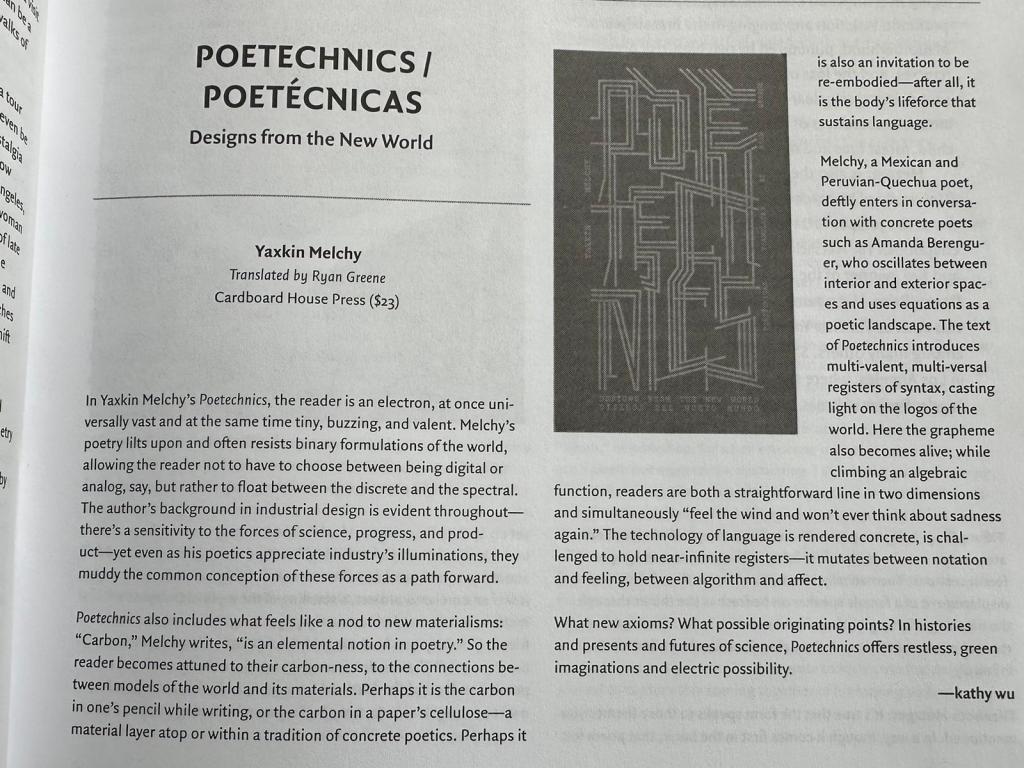
Poetechnics (Cardboard House Press, 2023) book in Spanish/English

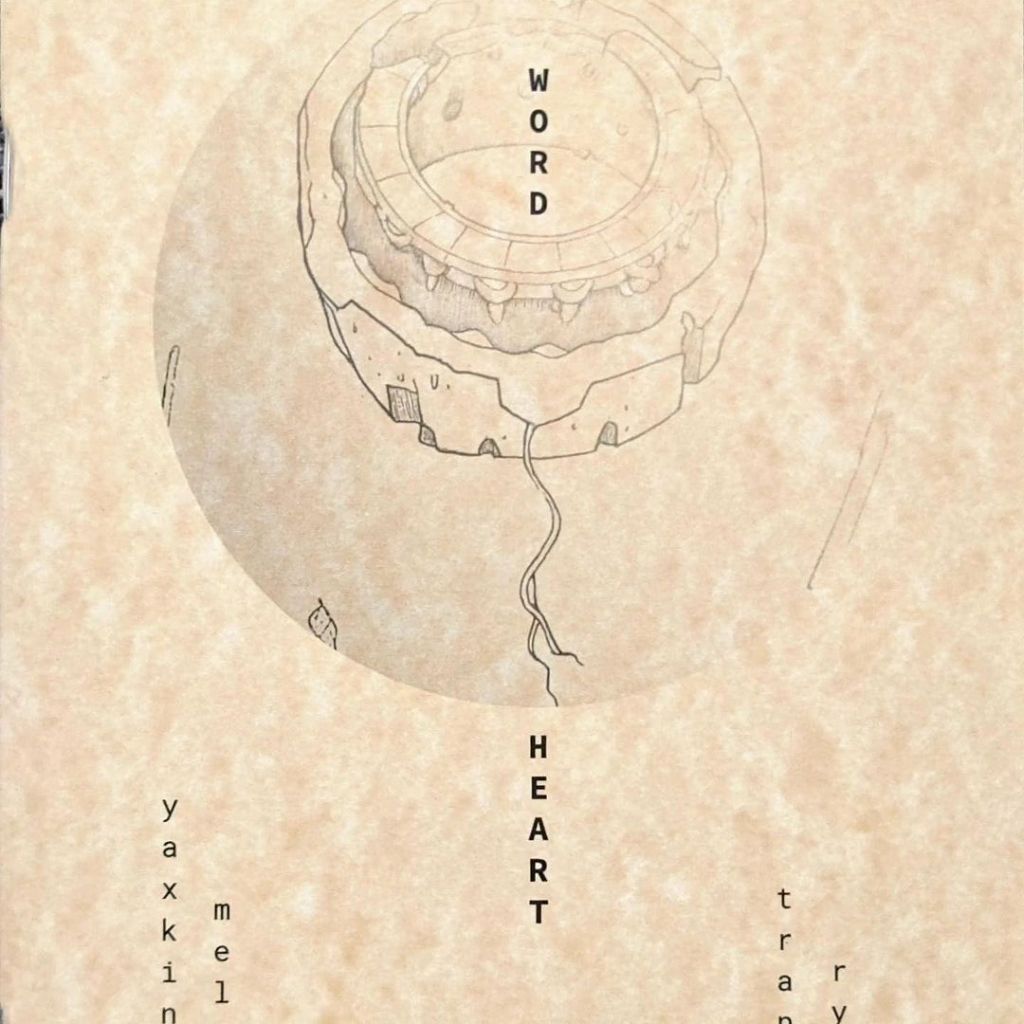
Word Heart (Veliz Books-Toad Press, 2023) chapbook in English

Mandalas (También el caracol, 2022) Anthology of modern Japanese poetry, book in Spanish/Japanese

Baghdad Burning (in The Offing, 2024) poem in Spanish and English
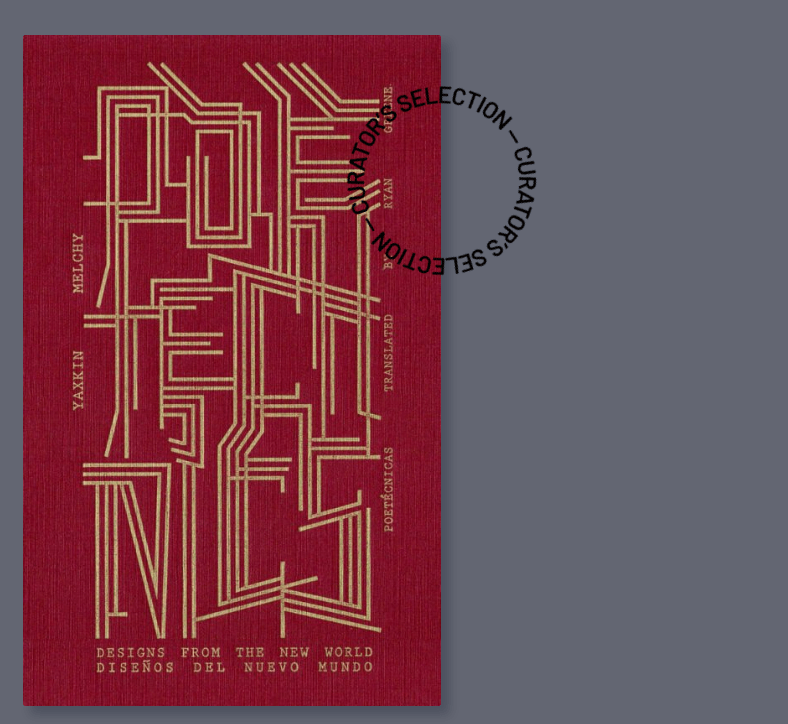
Poetechnics (curator’s selection for the Architecture Book Fair, 2023)
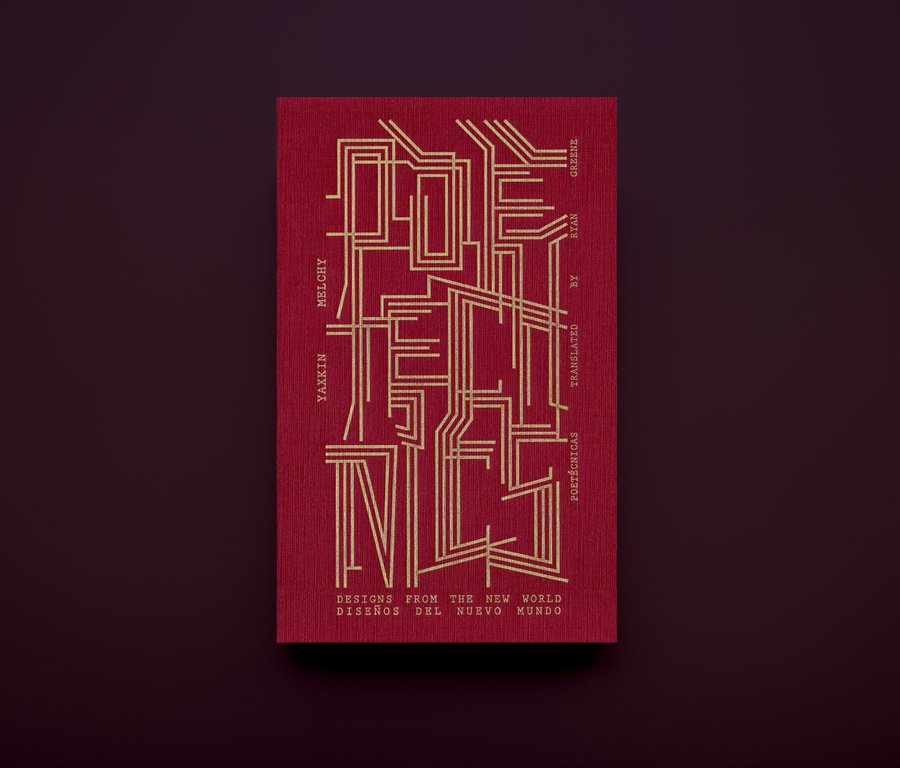
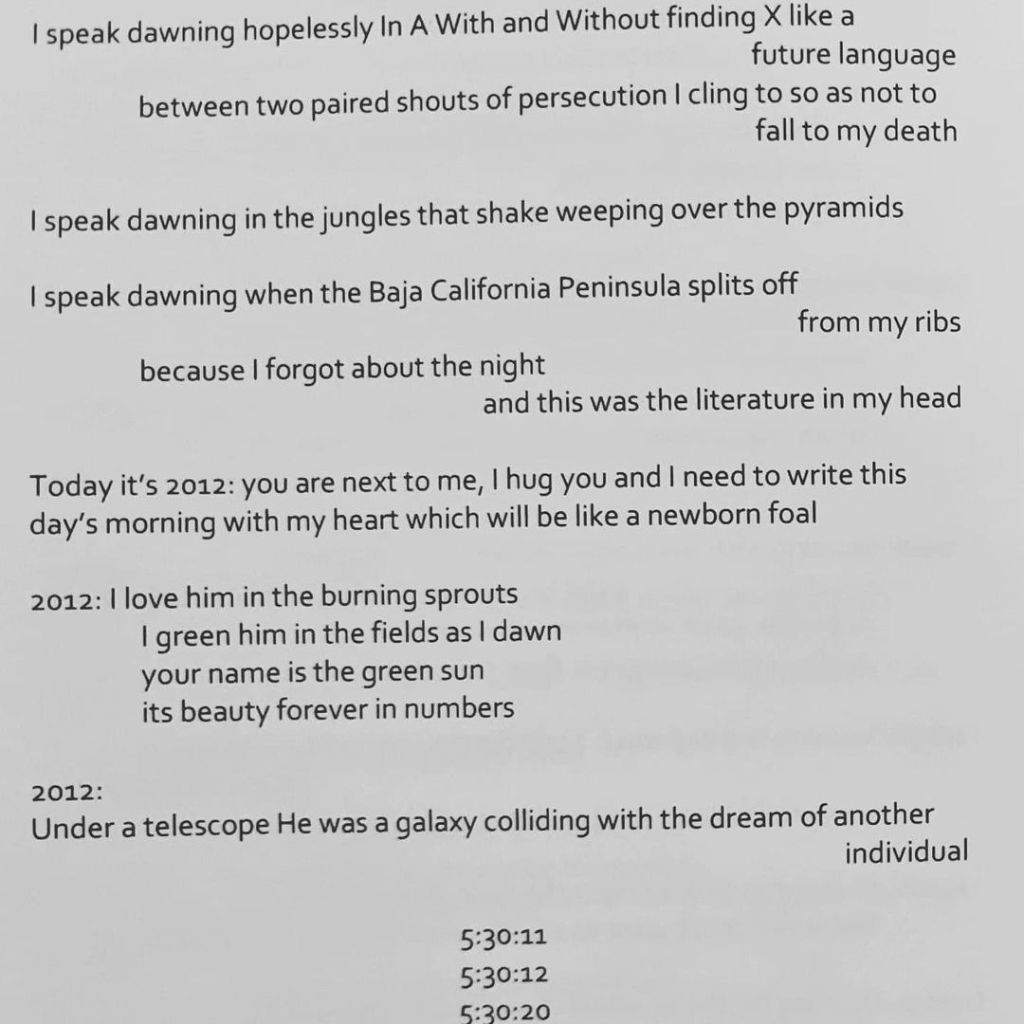
New poetry book for 2023. Translation of Poetechnics translated from Spanish by Ryan Greene in Cardboard House Press

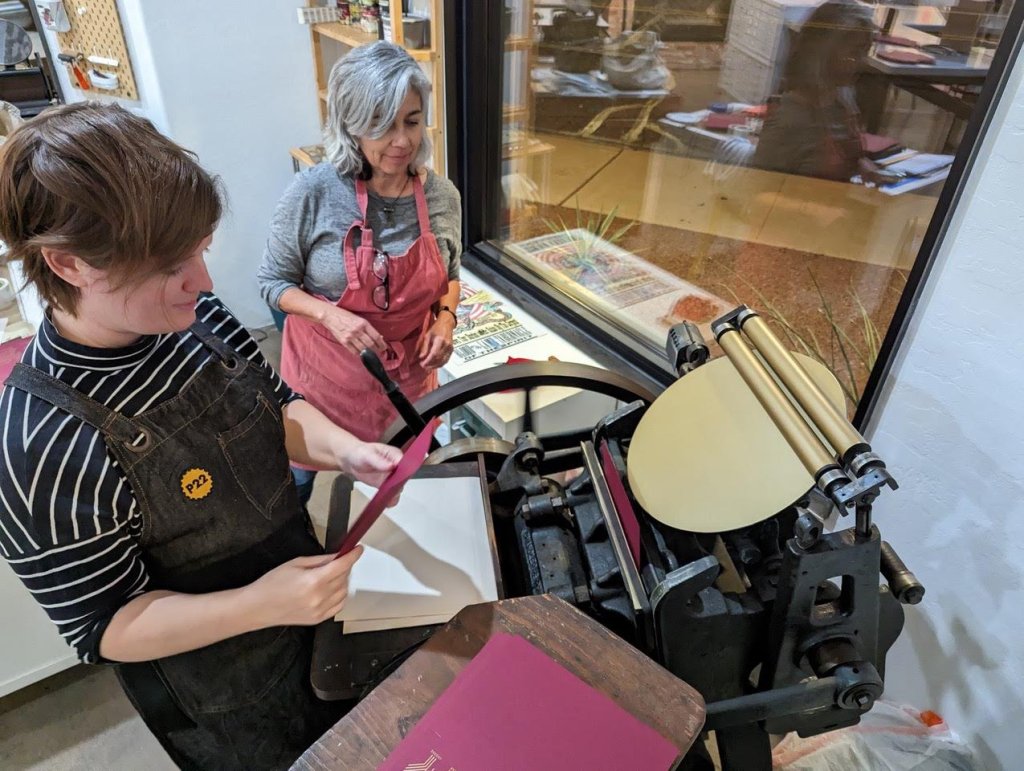
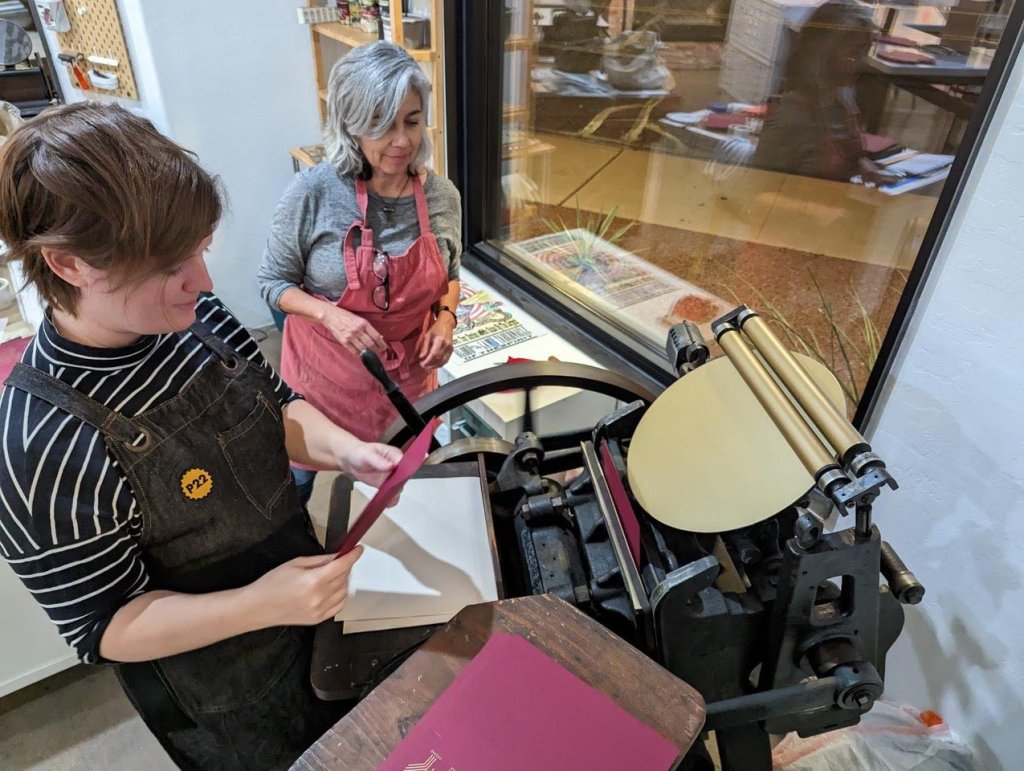
Now available for PRE-ORDER! POETECHNICS by Yaxkin Melchy and translated from Spanish by Ryan Greene! A Cartonera Collective Series book made by hand in community workshops with covers letterpress printed with Shut Eye Press!

Link: https://t.co/zXRVLcNLab

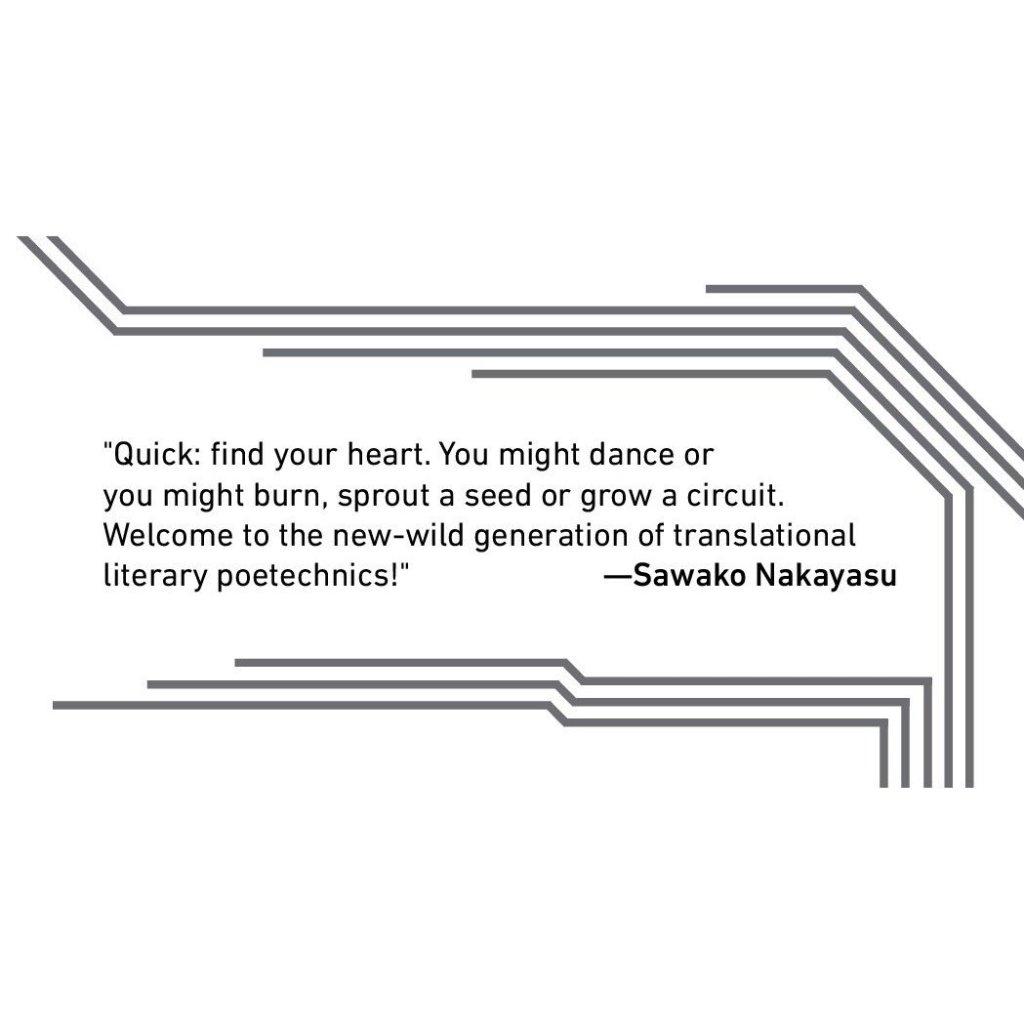
Thank you, to the poet-editor Giancarlo Huapaya and the Cardboard House Press team, Ryan Greene, for the careful translation, and Sawako Nakayasu for her reading. A beautiful and complete artisanal work of edition for this heart-fi sci-poetry.

Bilingual version.

Qué son las Poetécnicas / Poetechnics

Este pequeño texto surge del diálogo que tengo con Ryan Greene, escritor , traductor y «book-farmer» que recientemente está creando interesantes caminos de traducción usando «transfluxión interactiva». Me emociona que la poesía encuentre en la tecnología nuevas vías de mostrarse; que las semillas de algún poema sean visitadas, cliqueadas y germinen en estos espacios acercando dos mundos en una misma tarea. Mi contribución a este diálogo con Ryan, nace de una relectura de EL NUEVO MUNDO, de la inspiración recibida de la poesía de Kenji Miyazawa y Enrique Verástegui, y de escuchar la propuesta terapéutica del pensamiento del corazón presentada por Pedro Favaron. Dentro de la filosofía de la ciencia, he encontrado un espacio para considerar seriamente esta propuesta en la visión crítica de Feyerabend.

What are poetechnics 

We need a dream-world
in order to discover the features of
the real world we think we inhabit.

Paul Karl Feyerabend, Against Method

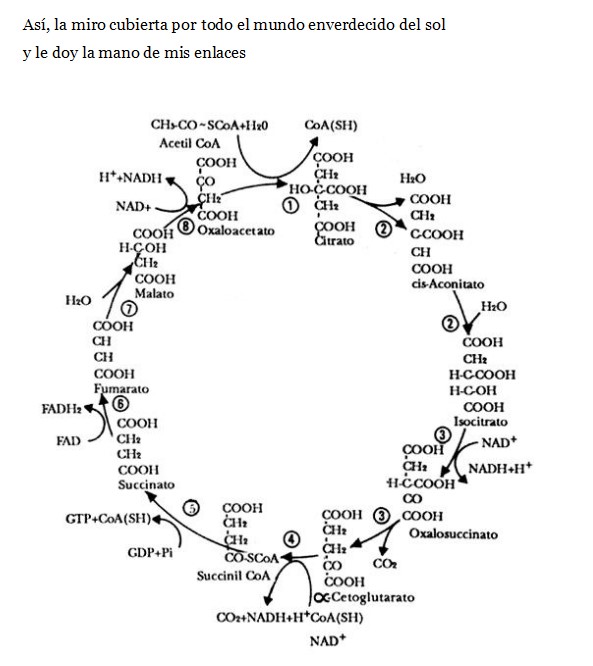
Poetic designs that intervene technological and scientific languages. They are rooted in the poetic appropriation and exploration of scientific language and frameworks in order to reengage equations, diagrams, and schematics using the fibers of the heart. Poetechnics tell us that “scientific objectivity” is in dialogue with the creation of our subjectivity and that the “objective” is connected with particular forms of feeling and thinking. Poetechnics reveal that the languages of the scientific method are subjective and that there’s nothing wrong with that – these languages can be springboards for the scientist’s and poet’s subjectivity: a game of knowledge and heart. Either way, to attend to one subjectivity is to attend to the other. The poetic laboratory and the scientific laboratory aren’t dissociated from one another. The poet is a scientist and the scientist is a poet who meet again when they each cultivate an observation of the world where the measured pattern of things and their mystery, the answer and the question dance together without either one dominating the other. Perhaps this is something that all our scientists and poets need – to freely cultivate a childlike and wonderstruck vision of our worlds without dissociating mind and body. I see poetechnics as a seed of new cultures where science and poetry are seen in another way. Cultures reverberating with the new nature summoned by the poet Kenji Miyazawa, and which was the integral poetics of Enrique Verástegui. Poetechnics are a contribution to the growth of interwoven worlds that can be more just toward (bio)diversity and more beautiful, and where the Krebs cycle and the irreducible singularity of life can beat within the heart as it watches a sprouting seed.

Last version: 24 de noviembre, 2022.

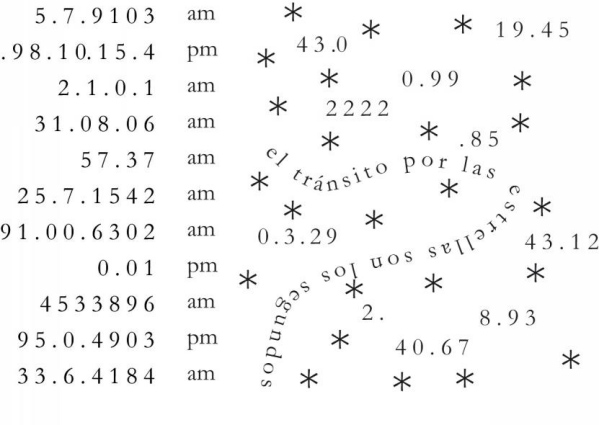
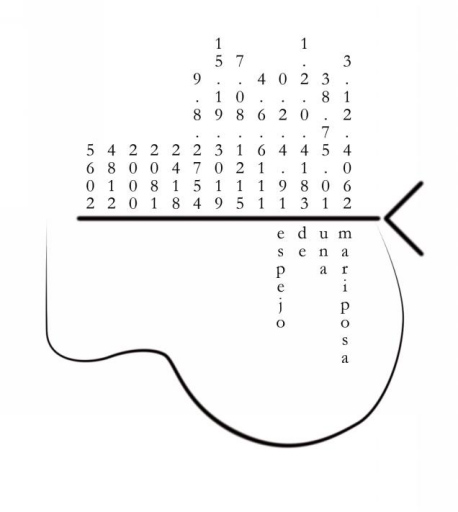
Imágenes de EL NUEVO MUNDO (2007-2017)

Dos enlaces de las transfluxiones interactivas creadas por Ryan Greene basándose en algún poema

https://sites.google.com/view/cometcometa/home?authuser=0

https://www.nogoodhome.com/sandbox/quiet-night-thoughts